Leadership in technical services consulting organizations presents unique challenges due to the complex interplay between technical expertise and business management demands. Leaders must balance maintaining their technical credibility while developing the broader business and people management skills necessary to guide their organizations.
The fast-paced and continuously evolving nature of technical services adds another layer of complexity to leadership. Leaders must stay current with technological advancements while simultaneously managing client expectations, market pressures, and team dynamics. They need to make quick decisions about resource allocation, project priorities, and strategic investments in new technologies or skills development, all while ensuring their teams remain motivated and engaged. This requires a delicate balance between short-term delivery demands and long-term capability building, often with limited resources and tight margins.
ready to go
upcoming unit
newly added (during the present quarter)
A quick, written synopsis on a topic, no more than 1200 words.
An informative video on a subject, no more than 20 minutes long; most are under 10 minutes.
A filmed or audio interview with a professional in the AEC industry.
20 brief activities completed daily, weekly, or monthly to build habits around a topic.
A group activity designed to plan, strategize, explore, or develop procedures.
A document, spreadsheet, or drawing that supports a task or exercise.
my library units
If you'd like to contribute new units to the library, go to your dashboard under the "contribute to the library" tab. Complete the form for your unit, which could be an article, video, interview, prompt set, template or exercise. Choose up to two topics for each unit. Your contributions will show here under "my library units".
Twennie's library units
VIDEO: Mentoring and Succession Planning; A Long Game
AUTHOR
Twennie Founders
Mentoring and succession planning aren’t tasks to complete—they’re long-game leadership habits woven into daily work. The most effective learning happens through real-time involvement, spontaneous exposure, and explaining the “why” behind decisions. Leaders must tolerate discomfort, adapt to different learning styles, and gradually let go as others grow. Mentoring expands when responsibility is shared, motivations are understood, and honest conversations guide development paths.
login required
VIDEO: A Leader's Tool: Opening a Safe Conversation About Anger at Work
AUTHOR
Twennie Founders
Rage at work doesn’t appear out of thin air, and it’s rarely caused by “difficult people.” For leaders, rage is almost always feedback about how power, accountability, safety, and fairness are functioning fora team. This video helps leaders recognize the workplace conditions that quietly generate rage, even in high-performing, well-intentioned environments. We’ll examine how leadership behaviors, structural decisions, and unexamined norms contribute to anger that eventually surfaces as disengagement, conflict, or burnout.
login required
VIDEO: Cross Discipline Conflict; Business Development vs Technical 1
AUTHOR
Twennie Founders
Proposal and marketing professionals work in ambiguity, supporting technical teams with widely varying levels of business development maturity. Without clear empowerment, they’re forced into reactive roles — proofreading, formatting, and following instructions that may miss the mark. This video examines the tension that arises when non-technical professionals challenge assumptions, deadlines, or strategy, and how easily those moments are misread as overstepping.
login required
VIDEO: The BD Excuses Jar; An Exercise in BD Culture
AUTHOR
Twennie Founders
The BD Excuses Jar is a simple, low-tech tool that does something most CRM systems never will: it makes invisible resistance visible. In this video, you’ll learn how to turn common, reasonable-sounding excuses into shared data your team can recognize without defensiveness. The goal isn’t to punish or embarrass anyone—it’s to surface patterns, normalize awareness, and create permission to talk honestly about what’s getting in the way of good business development. Humor lowers the temperature. Insight does the real work.
login required
VIDEO: The Business Development Meeting - How to Make 1-2 Hours Worth Every Penny
AUTHOR
Twennie Founders
This video presents a focused framework to make business development meetings productive and worth their cost. It argues that meetings can fail if they have unfocused agendas and lack of action. The solution is to narrow the purpose to winning work and apply a strict agenda filter. Discussions are organized into three stages: research (market awareness), positioning (actions on opportunities), and proposals (active pursuits). Each stage emphasizes clarity, contribution, and next steps.
login required
Bryan Leach Series; Your Board of Directors
AUTHOR
Bryan Leach
If you are responsible for managing your own career, Bryan suggests appointing a personal “Board of Directors”: a group of mentors who can provide knowledge, perspective, advice and guidance. Mentors can sponsor, coach, protect and challenge you while creating exposure to new opportunities. Bryan explores how to establish mentor-selection criteria based on competence, experience, accessibility, personality and other factors, and why no single mentor needs to provide everything. He also explains practical ways to identify potential mentors and allow productive mentoring relationships to develop
login required
Bryan Leach Series; What Do We Do and For Whom Do We Do It - Part 2
AUTHOR
Bryan Leach
Consulting engineers work in many types of business relationships, from transactional contracting to trusted strategic partnerships. Bryan Leach explores how adding value and strengthening relationships can transform customers into long-term clients. Through a memorable story about an environmental monitoring contract at a pulp mill, Bryan illustrates how three decision-makers within the same client organization viewed a competitive proposal very differently. While the contracts manager focused on price, the environmental director valued technical collaboration, and the mill manager emphasized
login required
EXERCISE: Gold Team Review
AUTHOR
Twennie Founders
The Gold Team Review Exercise is a final executive checkpoint before proposal submission, focused on risk, liability, pricing, and contractual terms. Senior leaders with signing authority review the RFP, proposal, and supporting documents to ensure compliance, financial soundness, and acceptable risk exposure. Unlike earlier reviews, the focus is not on content refinement but on commercial and legal viability. The session is fast, decisive, and may result in approval, required changes, or cancellation of the bid.
login required
TEMPLATE: BD Meeting Chair Handbook
AUTHOR
Twennie Founders
This handbook helps technical consulting professionals chair business development meetings that produce meaningful action instead of unfocused discussion. It introduces agenda filters, meeting structures, positioning exercises, market research integration, and proposal-stage strategies designed to keep senior professionals aligned around winning work. The workbook also teaches meeting chairs how to maintain momentum, prevent “rabbit hole” technical discussions, assign accountability, and turn market intelligence into strategic action.
login required
VIDEO: Design v Engineering: When Beautiful and Buildable Collide
PROJECTED
May 1, 2026
Design and engineering don’t disagree because one side is wrong — they disagree because they’re protecting different kinds of risk. Designers guard intent and experience. Engineers guard safety, performance, and liability. This unit explores where those priorities collide, why the conversations get emotional fast, and how to move forward without reducing the discussion to “you’re being unrealistic” or “you’re killing the design.” If you’ve ever left one of these meetings frustrated, defensive, or unheard, this one is for you.
VIDEO: Who Owns the Decision? Authority Gaps in Cross-Discipline Teams
PROJECTED
May 1, 2026
Cross-discipline teams often fail not because people disagree, but because no one is truly empowered to decide. Responsibility is shared, but authority is vague — and when things go wrong, blame gets very specific. This unit looks at how authority gaps form, why they’re so destabilizing, and how to surface and resolve them before frustration turns into resentment. If you’ve ever been held responsible for outcomes you couldn’t control, this will feel uncomfortably familiar — and useful.
VIDEO: Lost in Translation; How Disciplines Talk Past Each Other
PROJECTED
May 1, 2026
“Risk.” “Quality.” “Done.” “Feasible.”
These words sound universal — but they rarely mean the same thing across disciplines. Engineers, designers, PMs, and business teams often believe they’re aligned when they’re not, because no one realizes they’re speaking different professional languages. This unit explores how translation breakdowns happen, why they’re so hard to detect in the moment, and how to clarify meaning without sounding pedantic or condescending. It’s about preventing conflict before it even shows up.
VIDEO: When Collaboration Slows Everything Down (and What to Do About It)
PROJECTED
May 1, 2026
“Let’s get everyone in the room” sounds responsible — until decisions stall, momentum disappears, and accountability dissolves. This unit challenges the assumption that more collaboration is always better. You’ll learn how to recognize when alignment is essential versus when parallel work is healthier, how over-coordination creates hidden risk, and how to move work forward without being labeled uncooperative. It’s a practical look at collaboration with boundaries — not collaboration theater.
VIDEO: Silo-Busting; Breaking Down the Barriers That Keep Your Organization from Working Together
PROJECTED
May 1, 2026
Most professionals don’t create silos — they inherit them. Reporting lines, incentives, workflows, and handoffs quietly push disciplines into defensive positions, even when everyone wants collaboration. This unit reframes silo conflict as a systems problem rather than a people problem. You’ll learn how silos show up in day-to-day work, why “just collaborate more” often backfires, and what individuals can realistically do to reduce friction without becoming political lightning rods.
VIDEO: Using Lean Without Turning Your Team into a Factory
PROJECTED
July 1, 2026
Lean is often misunderstood as a tool for speed and efficiency at any cost. In technical consulting environments, that misunderstanding can turn thoughtful professionals into reluctant participants in process theater. This unit reframes Lean as a decision-making lens rather than a productivity weapon. You’ll learn how to identify real waste without oversimplifying complex work, how to use Lean principles to improve flow instead of control behavior, and how to apply Lean in a way that respects expertise, context, and the realities of human work.
VIDEO: Risk Management Without the Illusion of Control
PROJECTED
June 17, 2026
In many organizations, risk management becomes a false sense of security: registers are filled out, boxes are checked, and everyone pretends the important risks are now “handled.” This unit challenges that illusion. You’ll learn how to identify meaningful risks early, distinguish between real and performative mitigation, and talk about uncertainty in a way that builds trust instead of fear. It focuses on risk as a living conversation — one that requires judgment, honesty, and the courage to surface uncomfortable truths before they become crises.
Most professionals understand the Pareto Principle in theory, but struggle to apply it in practice. In consulting environments, everything feels urgent, visible, and risky — making it hard to distinguish between high-impact work and noise. This unit focuses on how to use 80/20 thinking in real situations: proposals, projects, client relationships, and internal priorities. You’ll learn how to identify where effort truly pays off, make intentional trade-offs, and resist the pressure to treat all tasks as equally important. It’s about focus, judgment, and impact — not shortcuts.
VIDEO: People Before Profit: Practical Strategies for Living the Philosophy
PROJECTED
April 10, 2026
Many organizations claim to put people first — far fewer know what that actually looks like in practice. This unit moves beyond values statements to examine how everyday decisions either support or undermine a people-first philosophy. You’ll explore practical strategies for balancing human needs with business realities, making trade-offs transparently, and resisting the quiet pressures that turn “people before profit” into an empty phrase. It’s about aligning leadership behavior, project decisions, and expectations so that caring for people strengthens performance instead of competing with it.
VIDEO: Leadership Tonic; How to Treat and Heal Team Wounds
PROJECTED
June 26, 2026
Teams carry wounds—burnout, broken trust, unresolved conflict, and quiet exhaustion—that don’t heal on their own. Leadership Tonic: How to Treat and Heal a Team’s Wounds helps leaders recognize these injuries early and respond in ways that restore stability rather than cause further harm. The video focuses on practical leadership behaviors that calm nervous systems, reestablish psychological safety, and rebuild trust without lowering standards or avoiding hard conversations.
TEMPLATE: A Field Guide to Writing an Award Submission
PROJECTED
May 29, 2026
Award submissions aren’t about hype or perfect prose—they’re about clarity, proof, and empathy for the reviewer. This field guide breaks down how to turn complex projects into compelling, credible stories that judges can easily follow, remember, and defend. You’ll learn how to frame challenges, decisions, and results without exaggeration, align your narrative to award criteria, and avoid the most common mistakes that quietly sink strong submissions.
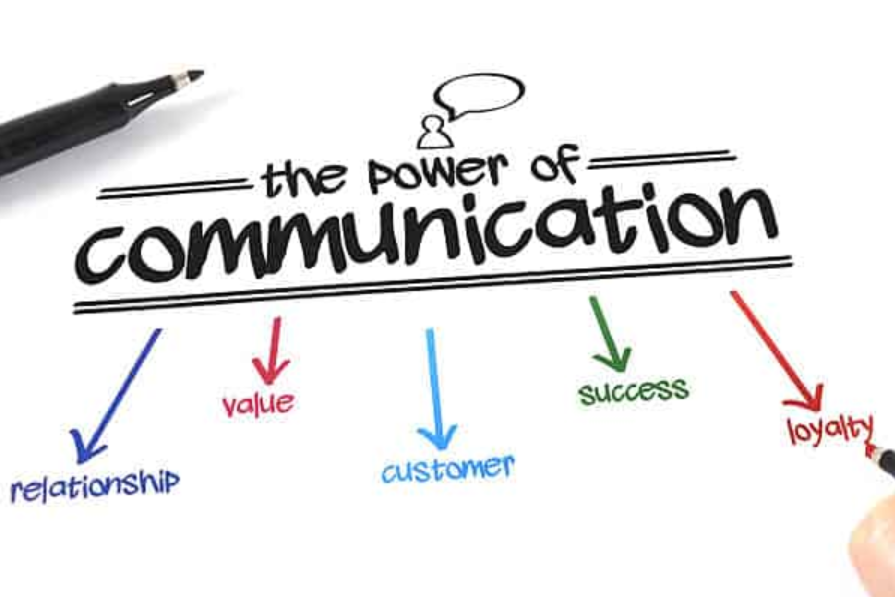
Feedback is one of the most important communication tools in technical consulting, yet it is often delivered in ways that create defensiveness, uncertainty, or disengagement. In this video, you'll learn how to give feedback to clients, team members, supervisors, and colleagues in ways that improve performance while preserving trust and collaboration. You'll also discover how to gather meaningful feedback that goes beyond simple satisfaction and helps identify opportunities for improvement.